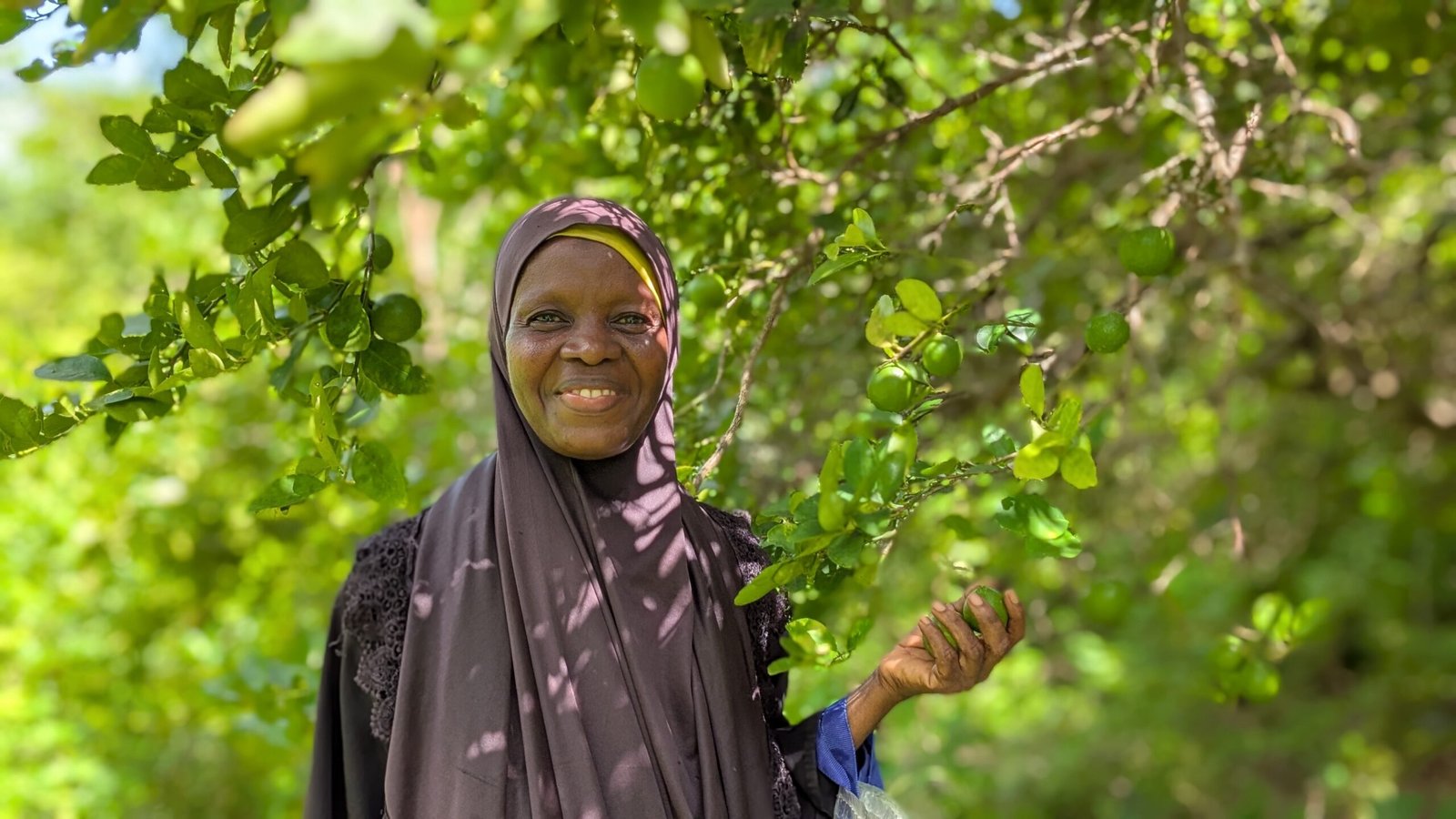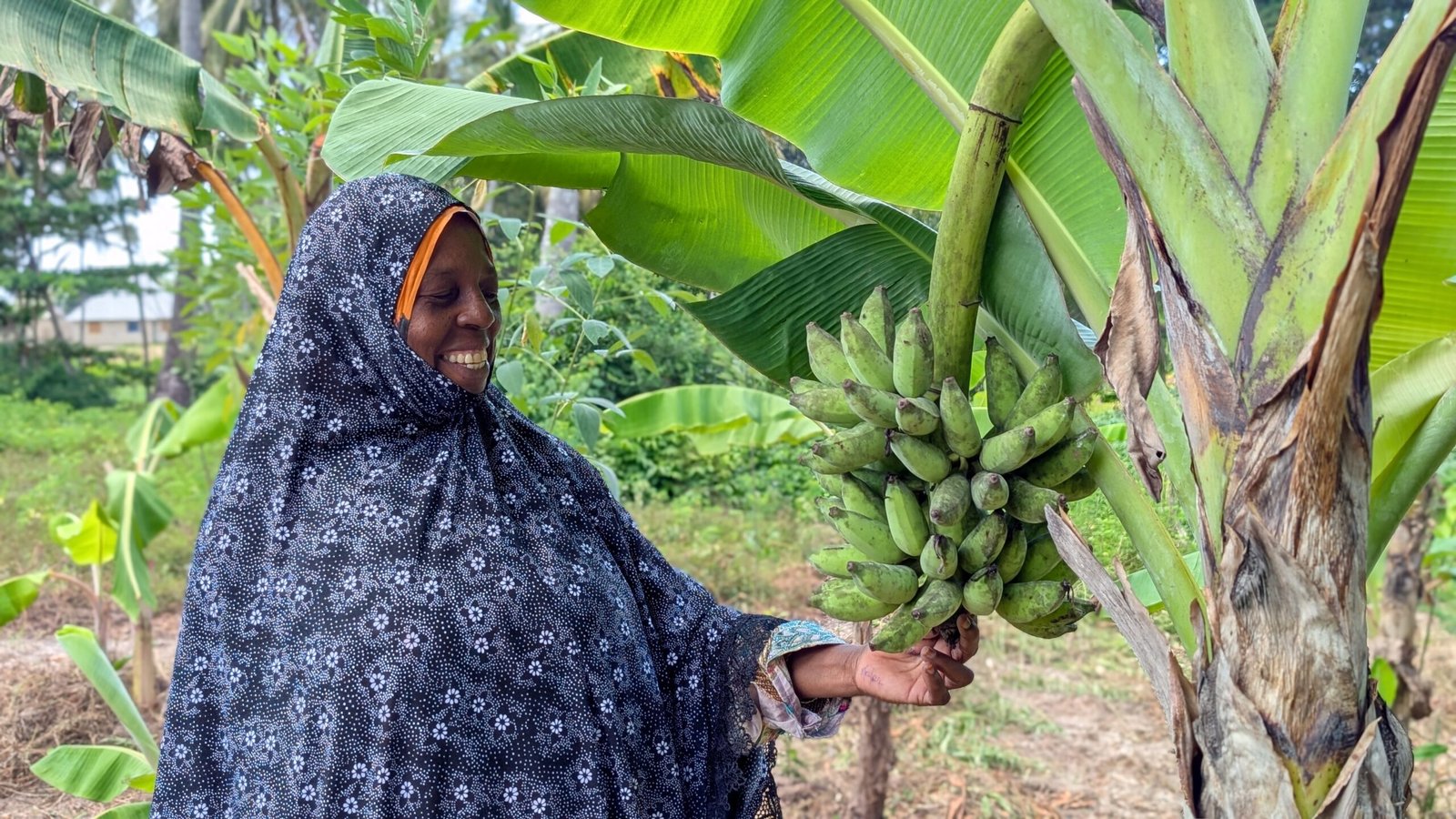
Hadia Omar Haji has been a farmer for many years, cultivating crops like cassava, rice, and plantains on her husband’s land. Despite her experience, she had never received formal agricultural training and, more importantly, did not have ownership of the land she farmed.
In 2024, when the ZanzAdapt Project was introduced in her village of Chwale, Hadia saw an opportunity to transform her future through agroforestry. Around the same time, she inherited a piece of land from her late mother, shared with her siblings. For Hadia, this was more than inheritance, it was a chance to finally farm on land she could call her own.
Agroforestry requires long-term investment. Trees take years to mature, making land ownership essential. On her husband’s land, this was not possible. But on her inherited land, Hadia could finally begin building something sustainable.
However, her plans were quickly threatened.
Her land bordered that of her male cousin, who when she shared her plans and even encouraged him to join agroforestry, refused. He went ahead and forbade her from planting permanent trees, claiming authority over the land and even threatening to uproot anything she planted.
Despite being the rightful owner, Hadia faced intense pressure, highlighting the challenges many women in rural Zanzibar face when it comes to land rights and inheritance.
The situation became overwhelming. At one point, Hadia even considered selling her land, offering it to her cousin. But when no buyer came forward, she made a decision: she would not give up.
Perseverance, patience, and quiet courage
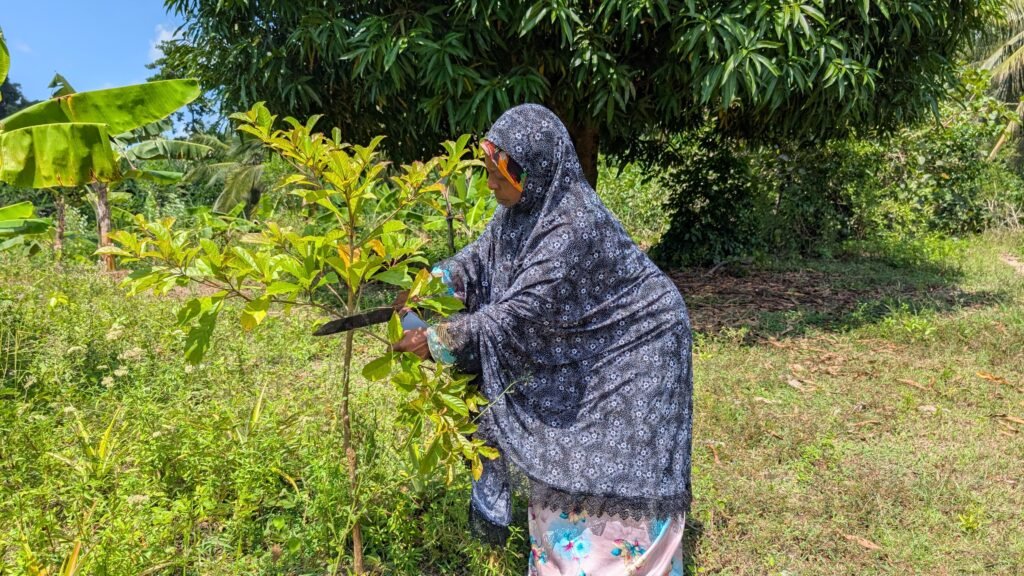
Determined to move forward, Hadia began preparing her land for agroforestry. With resilience and focus, she planted a variety of short term and long term crops, including Pemba almonds, oranges, mangoes, pineapples, and plantains.
Even as her cousin continued to pressure and threaten her, Hadia chose a different approach. Rather than escalating the conflict, she responded with patience, persistence, and wisdom.
As her farm began to grow and her seedlings took root, visible progress started to shift perceptions. Her cousin began to notice the potential value of her work.
Still, Hadia did not give up on him.
“I told him to join agroforestry. Planting trees will not only benefit him financially but also help the environment and the community,” she said.
Though he initially refused, Hadia remained intentional in maintaining a relationship with him—understanding that peace and cooperation were essential for the long-term security of her farm.
In a bold and strategic move, when a buyer approached her cousin to purchase plantains from her farm, Hadia allowed him to negotiate the price and even keep a portion of the earnings.
This act of trust and generosity marked a turning point.
From conflict to cooperation
Gradually, the tension between them began to dissolve.
Hadia’s patience paid off. Her cousin, who once threatened to uproot her crops, began to support her efforts. Today, she farms peacefully on her land, free from conflict and fear.
Her agroforestry farm is now thriving. She has already harvested plantains and is looking forward to future harvests, including pineapples.
Reflecting on her journey, Hadia recognises how close she came to giving up:
“The tension and conflict have completely dissolved. If I had decided to sell my land, I would have continued to hold a grudge against him and blame him.”
Hadia’s experience reflects a broader reality: many women in rural Zanzibar face barriers when it comes to inheriting and controlling land.
But her journey also offers a powerful message:
“When you inherit anything, fight for it. Don’t ever let it go.”
Through perseverance, courage, and patience, Hadia not only secured her land but transformed it into a source of livelihood and hope.
And while she now farms in peace, her vision continues—she still hopes one day her cousin will join her in agroforestry.