Before the establishment of a Community Forests Management Agreement (CoFMA) in Unguja Ukuu, mangrove conservation efforts were led by a local community group, Mikoko ni Urithi Wetu. While committed, the group was largely made up of older community members.
For years, youth participation remained low, and there were no young leaders to represent the next generation. Despite ongoing conservation work, the lack of youth involvement meant missed opportunities for innovation, sustainability, and long-term continuity.
The introduction of the ZanzAdapt Project marked a turning point. With a strong emphasis on youth and women’s participation, the community began to rethink its leadership structure.
When the CoFMA was officially formed in 2025, both elders and youth came together to design a more inclusive system—one that ensured shared leadership across generations.
A key decision emerged: Every leadership position would have a youth representative.
Inspired by this shift, Shaaban Omar Shaaban (29) and Zakia Mansab, both active members of the mangrove conservation group since 2022 and 2024 respectively, stepped forward to run for leadership positions. Through the project, they had gained not only technical knowledge in mangrove conservation but also training in governance and leadership.
Their confidence and commitment paid off—they were elected as Chairperson and Deputy Secretary.
“I was confident I would win because of the effort and hard work I put into our conservation work,” said Zakia.
For Shaaban, leadership came with a clear purpose:
“My goal in leadership is to transform the organisation and the people who have entrusted me to lead.”
Since their appointment, CoFMA and mangrove conservation efforts have undergone a noticeable transformation.
Youth participation has significantly increased, bringing renewed energy and ideas into conservation efforts. The committee is also learning to embrace modern approaches, including the use of technology and social media to support awareness and coordination.
Activities that had previously faded—such as beekeeping—have been revived, creating new opportunities for income generation within the community.
Looking ahead, the youth-led leadership is also developing plans for sustainable mangrove tourism, aimed at creating jobs while protecting natural resources.
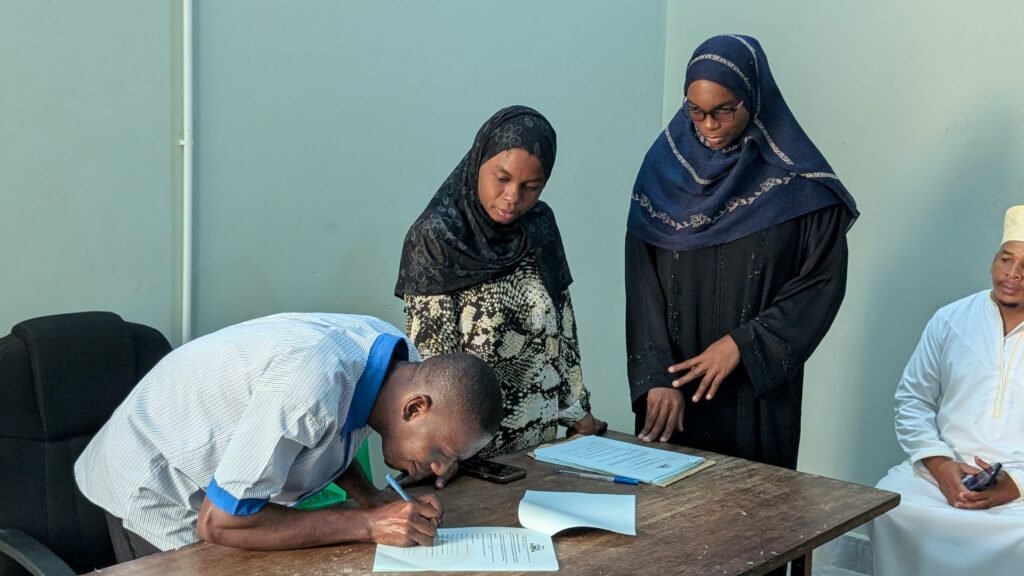
Leading in a traditional setting has not been without challenges. As young leaders, Shaaban and Zakia have had to navigate hesitation from some community members, particularly around accepting new ideas or being led by youth.
However, cooperation has been key.
“Without cooperation, we wouldn’t be able to achieve anything. I can’t do anything without Zakia and vice versa. There’s immense collaboration with other leaders and members to achieve our shared goals,” said Shabaan.
Zakia adds:
“You shouldn’t give up. You have to remember why you’re doing something and keep going and eventually, they’ll accept you.”
With the CoFMA structure now finalised, the team is ready to move from planning to implementation. A strategic plan is already in place, focusing on strengthening conservation efforts while expanding income-generating opportunities for the community.
Their vision goes beyond environmental protection—they aim to empower fellow young people not only to engage in conservation but also to build sustainable livelihoods.
The opportunity to lead has strengthened their confidence and sparked aspirations for broader leadership roles in the future.
But for now, their focus remains clear: transforming their community, together.