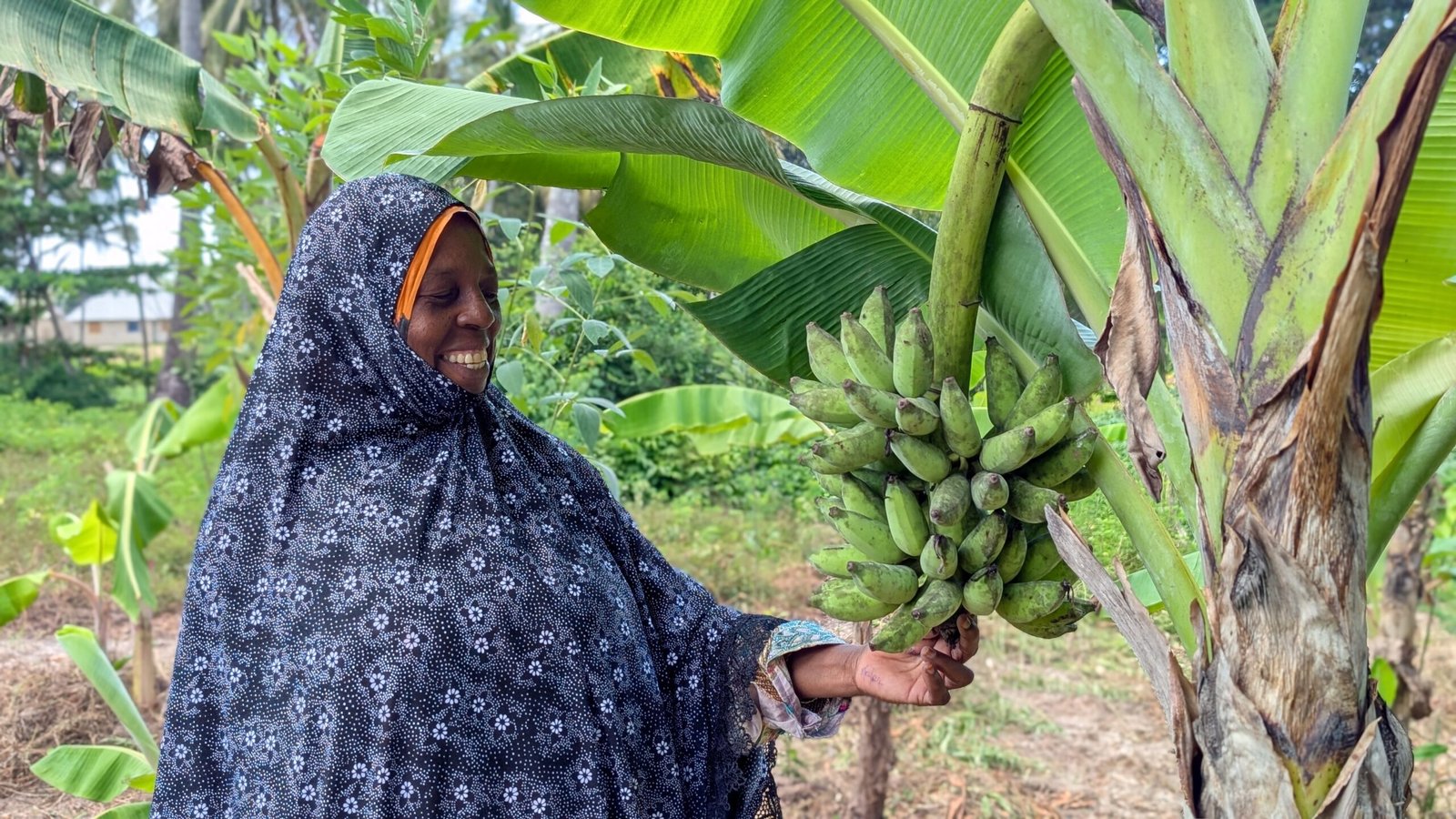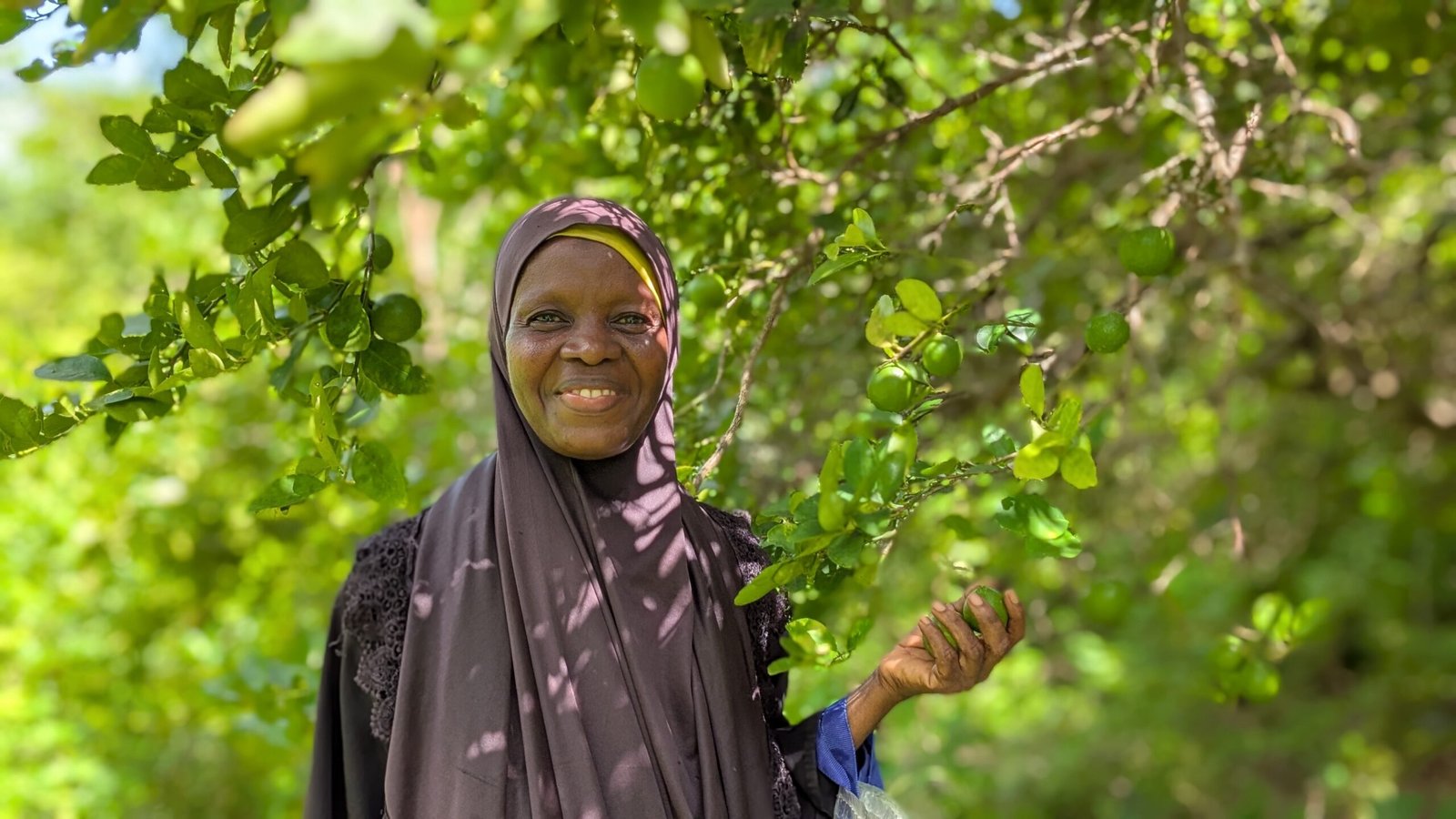
Eight months ago, Bi. Hakika Busara (46) had never farmed a day in her life. Her livelihood depended entirely on the ocean—long, exhausting days spent fishing just to put food on the table and earn a small income. The work was physically demanding and often unreliable. Despite her efforts, she struggled to fully meet her family’s needs.
At the same time, she watched other women in her village of Unguja Ukuu join the ZanzAdapt project and begin transforming their lives through agroforestry. They were growing food, earning income, and building more secure futures.
“I felt envious when I saw other women benefiting,” she recalls. “I also wanted to farm, to have something of my own.”
A Barrier to Participation
But Bi. Hakika faced a major barrier—she did not own land. Without access to land, she could not participate in the project, leaving her feeling excluded and discouraged.
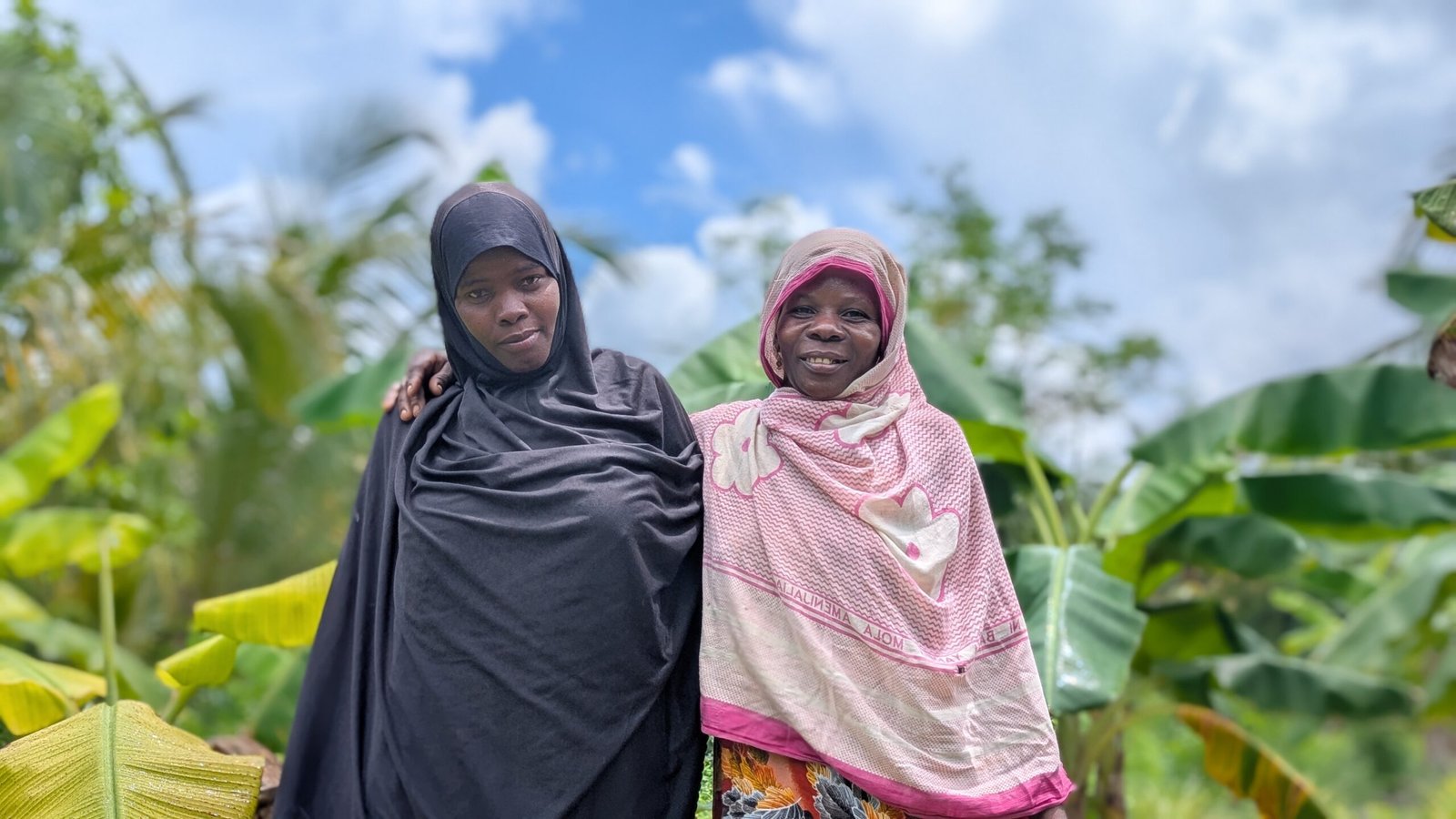
Carrying this frustration, she confided in her close friend, Bi. Rehema (46). Recently widowed, Bi. Rehema had inherited her husband’s farm and was transitioning into agroforestry. But farming was relatively new to her and she had been finding it difficult to manage the farm on her own.
Moved by her friend’s situation, Bi. Rehema made a life-changing decision. She offered Bi. Hakika half of her land to farm, for as long as she needed.
“I wanted to help her because she is a dear friend,” says Bi. Rehema. “So she can support herself and her children, have food to eat, something to sell, and a way to meet her basic needs.”
Growing Together Through Partnership
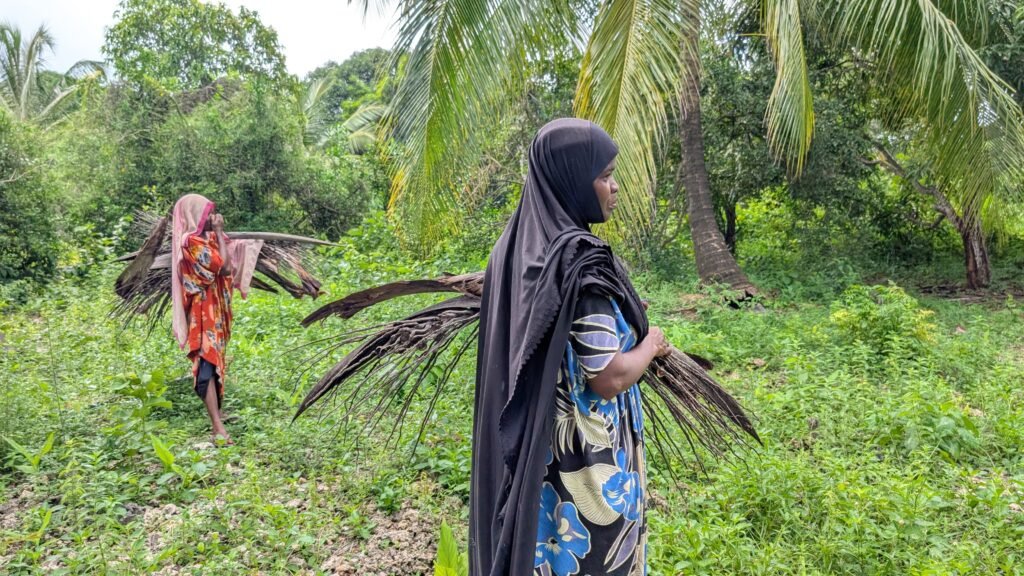
What began as an act of generosity quickly grew into a strong partnership. Rather than working separately, the two women support each other—sharing labour, knowledge, and responsibility across their farms.
With encouragement from ZanzAdapt project officers, their collaboration expanded even further. Together, they reached out to other women in the project and formed a small informal group, to share technical knowledge, reduce labour burdens, and strengthen their productivity.
“The project taught us the importance and power of ujima, collective work and responsibility,” says Bi. Rehema. “We take turns helping each other on our farms, and I am very grateful for that.”
Transforming Livelihoods
For Bi. Rehema, this arrangement has benefited her tremendously. As a widow, she had been struggling to manage her farm. Through this partnership and group support, she now has the help she needs to sustain her farm and better provide for her family.
For Bi. Hakika, the transformation has also been profound. She has gradually stepped away from the physically demanding sea activities and now relies on agroforestry to feed her family and earn an income. What once felt out of reach is now her reality.
Looking ahead, both women have ambitious goals. Bi. Hakika is saving her earnings with the hope of purchasing her own land in the future. Meanwhile, Bi. Rehema continues to strengthen her farm with the support of her peers. They are both exploring ways to diversify their income—such as processing products and starting small businesses like juice making.
When Women Support Women
Their story is a powerful example of how communities thrive when solutions come from within. While ZanzAdapt provides training in agroforestry and promotes climate resilience, it is the spirit of cooperation and mutual support that truly drives transformation.
What began as a simple conversation between friends has grown into a network of women uplifting one another—proving that when women support women, lasting change is possible.