Vuli season has arrived In Zanzibar, for the average person this simply means a shift toward cooler weather, but for smallholder farmers this marks one of the most important agricultural windows of the year. With a heavy reliance on rain-fed agriculture, these rains determine planting cycles, harvest outcomes, and in many cases, household food security. But with climate change disrupting rainfall patterns across Tanzania, these once-predictable seasons have become increasingly uncertain.
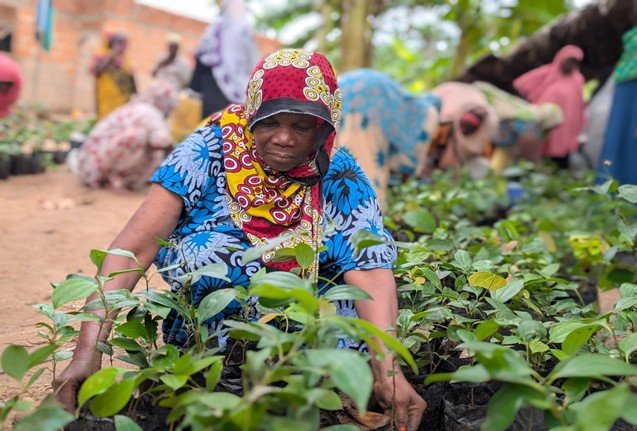
Recognizing how precious each rainy period is, Community Forests Pemba (CFP) through the ZanzAdapt Project is working to ensure farmers make the most of the Vuli season by distributing short term and long term forestry seedlings to support agroforestry initiatives. Agroforestry supports ecosystem services like water regulation, soil protection, shade, and nutrient cycling, helping farmers adapt to a changing climate while increasing productivity
Strengthening Communities Through Seedling Distribution
This November, ZanzAdapt carried out a major seedling distribution exercise across Unguja and Pemba, providing more than 500 smallholder farmers in the island of Unguja and Pemba with 59,000 forestry trees. The farmers (90% being women ) received species such as Indian almond, Pemba almond, mahogany, teak, neem, jackfruit, and other climate-resilient forestry species.
Shared Decisions, Lasting Impact
True to his word, Fatma’s husband not only gave her a plot to farm but went further. He ensured that the land was officially registered in her name, complete with a title deed approved by his family. This step left no room for future disputes and secured Fatma’s right to ownership.
For Fatma, this was life-changing. She had become the proud owner of her own plot of farmland—a foundation for economic independence and a guarantee of security for her children.


The seedlings were sourced directly from project supported community-managed nurseries. This marks the second time the community nurseries have successfully supplied seedlings back into surrounding villages — a significant milestone illustrating the project’s commitment to building a sustainable, self-reliant system.
This achievement shows that the foundation being built today will continue to flourish long after the project ends — ensuring Zanzibar’s farming communities are equipped not just to survive climate change, but to thrive.