For many of the women supported through the ZanzAdapt Project, selling their products has long meant relying on familiar networks, neighbours, relatives, and community events within their shehia. While these spaces provided a starting point, they also came with major limitations. Market saturation meant prices had to stay low to remain competitive, and opportunities to experiment, grow, or reach new customers were few.
What the women needed was a new market.
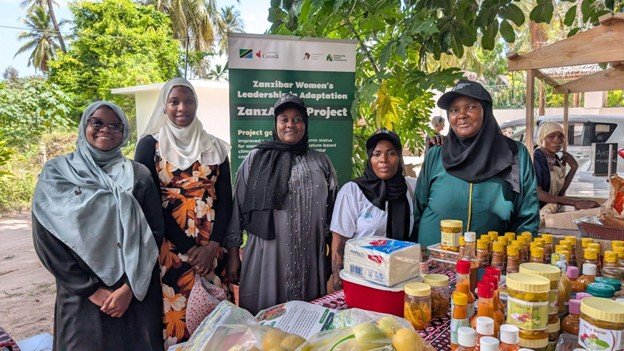
That’s why, through the project, three representatives were selected to showcase and sell their cooperative products at the Paje Farmers Market, a monthly event that brings together hotels, tourists, and other high-value buyers. Participation in such an event would not only allow the women to showcase their products to a new market but, perhaps most importantly, to learn market needs and establish new partnerships.
Learning by Doing
For the women, this was their first time participating in such a market and it proved challenging at first as they had to adjust to the unfamiliar setting, navigate language barriers, and try to attract customers they had never sold to before.
But this discomfort was exactly the point.
Building confidence, adaptability, and resilience is at the heart of ZanzAdapt’s approach to women’s economic empowerment: preparing women to face any market.
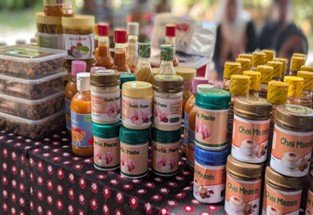
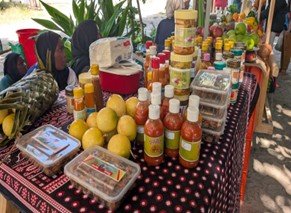
As the day unfolded, confidence began to grow. One standout moment came from Bi.Mwanamgeni Shaka Ali, who rather than waiting behind their stall, took the initiative to walk around the market, introducing her products and asking seasoned sellers for tips and advice.
Through these conversations, she gained practical insights into pricing strategies and shared them with her fellow entrepreneurs. Based on what she learned, the group slightly adjusted their prices, ensuring they not only made a profit but also covered the full costs of participating in the market. A clear demonstration of ingenuity, leadership, and business instinct.
Feedback That Fuels Growth
Overall, the products received positive reviews and stood out for their uniqueness. In a market filled with familiar offerings, their agroforestry-based products were described as a refreshing alternative. Beyond sales, the women gathered invaluable feedback from customers and event organisers on how to improve their products and make them more appealing to international buyers.
“Initially we were packaging our products in plastic containers but after coming here we learned about the customers preference for glass containers as they help preserve the food longer and they are environmentally friendly.” shared Bi.Mgeni, “we will definitely apply this for the next time”
They also began considering diversification, including selling fresh or raw farm produce for customers who use the market for weekly grocery shopping.
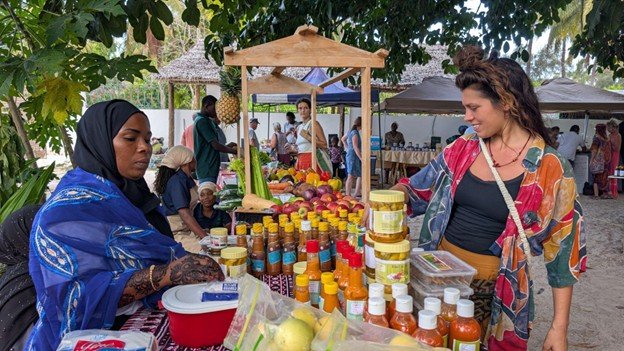
Lessons That Last Beyond the Market
Ultimately, the true success of the day was not measured by how much was sold, but by what was learned.
For one participant, Bi. Nadra, her main take away was the importance of understanding customers:
“It was challenging as I’m not used to this kind of market, but I learned that I need to be creative in my business. I need to study the market, diversify according to demand, and then select my products.”
This experience was more than a sales opportunity. It was a practical lesson in market research, customer engagement, pricing, branding, and adaptability. By stepping into an unfamiliar space, they discovered both their shortcomings and their potential.
And that is the power of exposure: you only learn when you try, and you only grow when you dare to step beyond what feels safe/address your shortcomings
Strengthening Community Governance: The Journey to Establishing CoFMAs in Unguja
Along the mangrove-fringed coastline of Bungi, Unguja Ukuu, Uzi, and Ng’ambwa, a quiet but powerful transformation has been taking place. In these shehias, where communities depend on forests and mangroves for fishing, farming, seaweed cultivation, and daily household needs, people have long recognized that their natural resources are both their inheritance and their responsibility. What they needed was a clear and formal structure to manage and protect them.
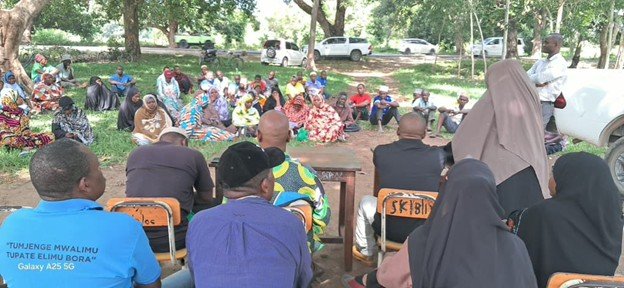
Under the ZanzAdapt Project, Community Forests Pemba (CFP) stepped forward to help build that structure—guiding communities through the development of Community Forest Management Agreements (CoFMAs). The process in Unguja unfolded in parallel with similar work in Pemba, reflecting a national vision to strengthen local governance across Zanzibar’s forests and coastal ecosystems.
From the beginning, CFP played a central role. Staff spent months in the four shehias facilitating conversations about forest pressures, mapping local resource boundaries with residents, and helping communities articulate the challenges they faced. These discussions often brought together local conservation groups, youth groups, elders, and local leaders, creating spaces where everyone could contribute. In Uzi and Unguja Ukuu, for example, women emphasized how mangrove degradation affected their safety and productivity. Through these exchanges, CFP helped communities translate their lived experiences into practical, community-owned by-laws.
By December, that groundwork had brought Unguja to an important milestone. CFP convened a multi-stakeholder meeting—the first of its kind for this CoFMA cycle—bringing together representatives from the Ministry of Agriculture, the Ministry of Lands, Housing and Human Settlements Development, environmental departments, civil society organizations, and researchers. For three days, the room buzzed with collaboration. CFP guided the review, ensuring the voices and decisions from the four shehias were reflected accurately and respected. The work done at community level proved strong; only minor adjustments were needed. By the end of the meeting, all partners agreed to a clear roadmap toward official approval and public announcement of the CoFMAs by February. The consensus was encouraging: the process was solid, and — with CFP’s coordination — everything was on schedule.
Still, true accountability required taking the documents back to the people who mattered most. CFP led validation meetings in each shehia, where community members examined their by-laws, boundaries, and responsibilities one last time. These meetings were lively, sometimes emotional, and always grounded in a sense of shared ownership. Residents were not just reviewing a document; they were shaping the rules that would govern their forests for years to come.
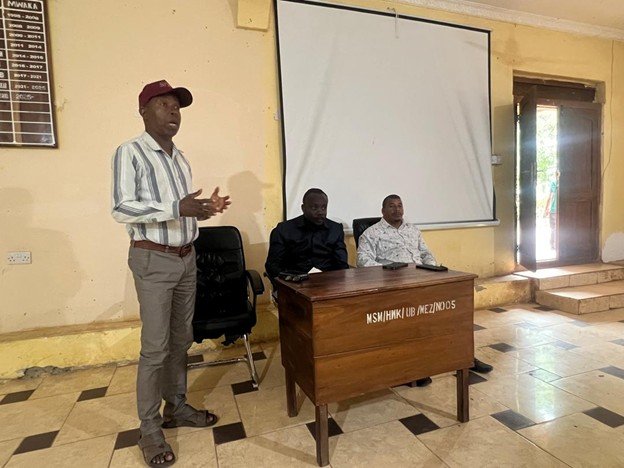
The final validation took place at the Dunga District Commissioner’s Hall, bringing community representatives together with district leadership. Central District Administrator Mr. Hamza spoke clearly about the significance of the work. He stressed the importance of communities adhering to the by-laws they had crafted and assured everyone that once the documents were finalized, his office would provide full support to ensure they were properly implemented and protected. His commitment reinforced the momentum that CFP had helped build from the ground up.
What began as community discussions months earlier had now evolved into a strong, well-coordinated governance framework — one that is ready for final approval and implementation.
Unguja’s CoFMA development is more than a set of documents—it is a testament to what becomes possible when communities, government, and civil society work hand in hand. Through its leadership and technical support, CFP has ensured that the people who depend on these ecosystems are the ones shaping their future.
And as the February deadline approaches, the four shehias stand ready, united by a shared vision of stewardship. Their forests and mangroves — once vulnerable to misuse — are now on a clearer, stronger path. With CFP’s guidance and community leadership at the core, Unguja is setting the foundation for a new era of local governance and environmental resilience.