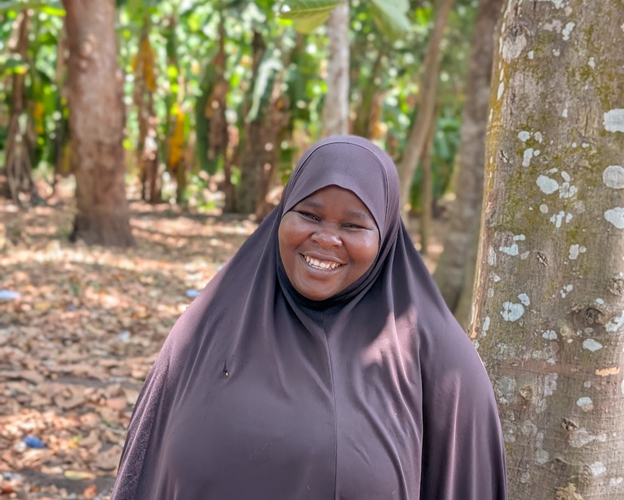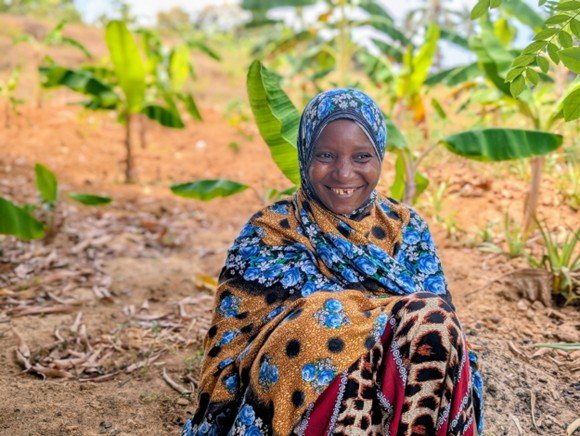
If you had told Bi. Fatma Ngwali a year ago said that she would one day become the proud owner of a fertile piece of farmland in Kiuyu Minungwini, she wouldn’t have believed it. For years, she worked tirelessly as a small-scale farmer, but always on leased land. Like many women in Zanzibar, this left her with no security, no rights to invest long-term, and little hope of passing something tangible on to her children.
As one of two wives, Fatma always felt her children’s future was uncertain. Without land of her own, she worried about what would happen when her husband passed away. Would her children inherit anything? Or would they be left vulnerable to family squabbles and conflict?
She dreamed of owning her own land—a place her children could inherit directly from her—but lacked the financial resources to make that dream a reality.
A New Opportunity
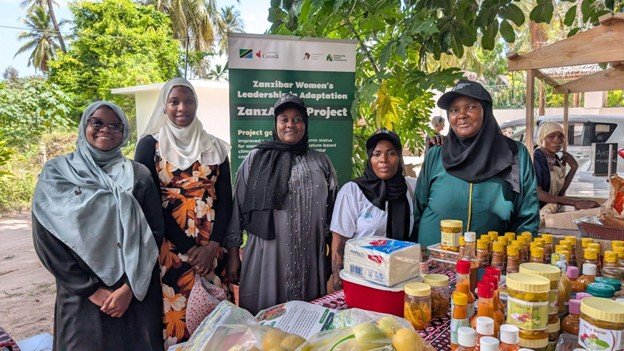
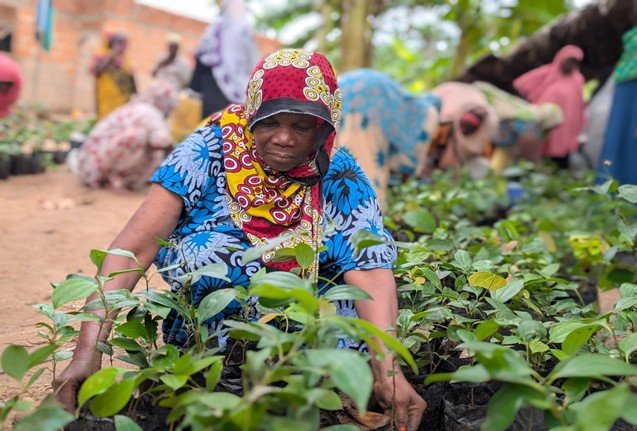
When the ZanzAdapt Project introduced agroforestry training and support in her community, Fatma saw an opportunity to improve her family’s economic situation. But there was one challenge: participation required access to land.
Initially, she thought of asking to use her parents’ land, though it was far from home and difficult to manage. With courage, she brought her idea to her husband. Instead of dismissing her ambition, he listened—and surprised her with an alternative.
He offered her a piece of his own land.
Shared Decisions, Lasting Impact
True to his word, Fatma’s husband not only gave her a plot to farm but went further. He ensured that the land was officially registered in her name, complete with a title deed approved by his family. This step left no room for future disputes and secured Fatma’s right to ownership. For Fatma, this was life-changing. She had become the proud owner of her own plot of farmland—a foundation for economic independence and a guarantee of security for her children.
Today, she farms cassava, vegetables, and agroforestry crops on her land. With the training and seedlings provided by ZanzAdapt, she has gained both skills and confidence to manage her farm productively. She now dreams of buying additional land and building a house for her children—ambitions she feels are within reach thanks to the income she will generate.
Why Land Matters
Fatma’s story is not just about one woman. It’s a reminder of how transformative land ownership is for women in Zanzibar. Land means more than soil to plant seeds—it is about dignity, economic independence, and the power to plan for the future.
Her husband’s support also underscores an important lesson: men are not obstacles to women’s empowerment—they are essential partners. By recognizing and valuing women’s rights, men can help unlock opportunities that benefit entire families and communities.
Looking Ahead
As she tends to her crops and looks toward her children’s future, Bi. Fatma reflects with pride on how far she has come. What once felt impossible—owning land in her own name—has become a reality. And now, she is planting seeds not just in her farm, but for the generational security of her family.
“When I look at this land, I see my children’s future,” she says. “It gives me hope, and it gives me strength.”