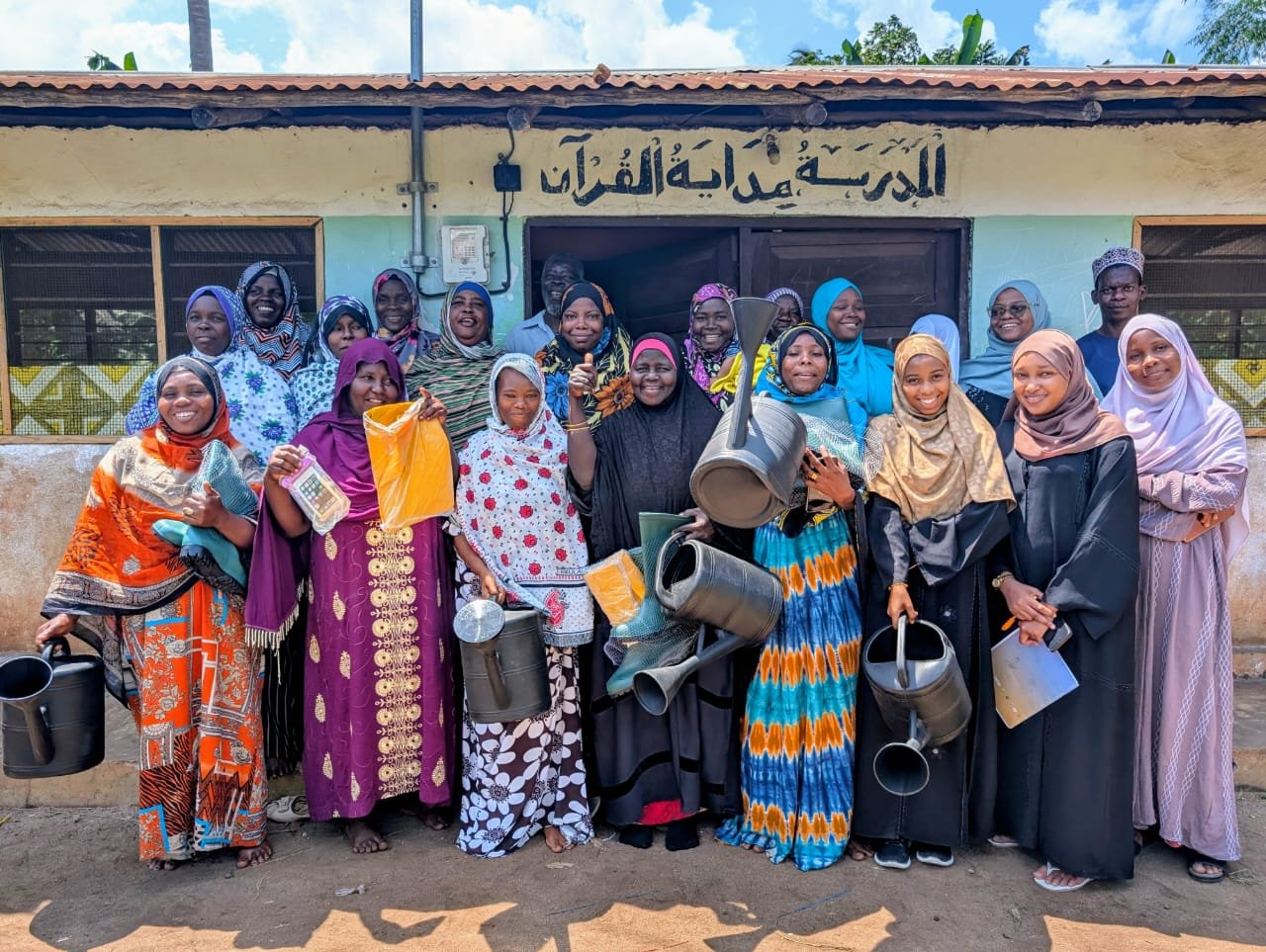
Bikombo Fakhi Ali has always aspired to be a leader—a quality she says she inherited from her father. But as a traditional wife in Chwale, Pemba, she found herself caught in the everyday hustle of life: raising her children and trying to supplement her husband’s income through a modest small-scale food business.
When the ZanzAdapt Project first came to her area, Bikombo saw it as a chance to change her life. She was inspired by the women already involved and immediately knew she wanted to join. But being heavily pregnant at the time the opportunity missed her. Still, she made a personal vow: once she gave birth, she would find a way in.
True to her word, after delivering her baby, she sought out Bi. Selme, an Agroforestry Trainer of Trainers (ToT) in her area, and asked to be registered as a student. It was then she faced her first challenge— the lack of farming land. Undeterred, she asked her husband to give her a portion of land. He agreed to lend her a piece of wild, unused land
With no one but her 18-year-old son to help, Bikombo spent an entire month clearing the land by hand, all while nursing a newborn “Whether in hardship or ease, morning, afternoon, or evening—I was in the field every day just to get a place to start farming,” she recalls.
With land now cleared, all she needed was training and seedlings to begin. But she didn’t wait around. Her goal was clear: she wanted to be a leader, and in this project, that meant becoming a ToT. For Bikombo, being a ToT wasn’t just about the title—it was about accessing information first-hand and using it to help others. “I didn’t want to wait to hear things secondhand. I wanted to learn directly from the source, and then share that knowledge.”
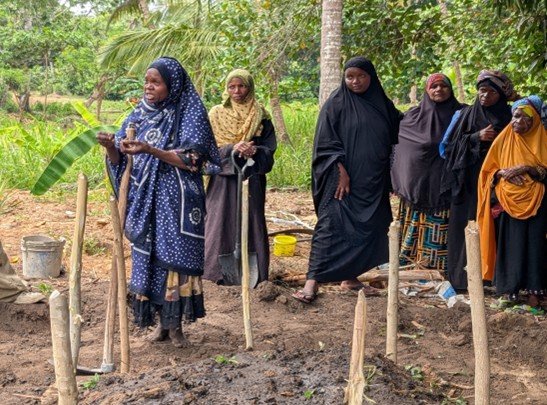
She asked Bi. Selme what the criteria for becoming a ToT were. She learned she would need a functioning farm, a strong work ethic, and—most importantly—students. So, before receiving any formal training or inputs, she boldly began recruiting. She successfully registered 11 students under her, but later gave up six of them to support other aspiring ToTs who lacked students—proof of her commitment to shared progress, not just personal gain.
Her dedication soon paid off. In her first distribution, she received 1,000 pineapple suckers. By the next, she had already qualified as a ToT. Known for her seriousness, quick thinking, and reliability, her promotion came as no surprise.
Her leadership continued to shine. She was later selected to join another project focused on soap-making, where she received enterprise training and brought in several local youths to benefit from the opportunity. That soap business now helps sustain her as she waits for her agroforestry crops to mature, reinvested some into her farm.
Bikombo’s life has taken a remarkable turn. From a small-scale vendor, she’s become a respected agroforestry farmer, a business owner, and a community leader. She’s not only achieved her leadership goals, but also built a brighter and more stable future for herself and her children.
“I’m truly grateful the project came into my life,” she says. “It gave me the gift of banana trees, but more importantly, the joy of saying, ‘I’m heading to my own farm to see what’s growing.’ That’s a blessing I never imagined.”
Speaking from experience, Bikombo urges other women not to be discouraged by those around them and to keep striving for their goals: “We must stand firm, work hard, and be courageous.”